
Embracing the Strength of Neurodiversity by Jumana Nsour
Updated: Jan 21
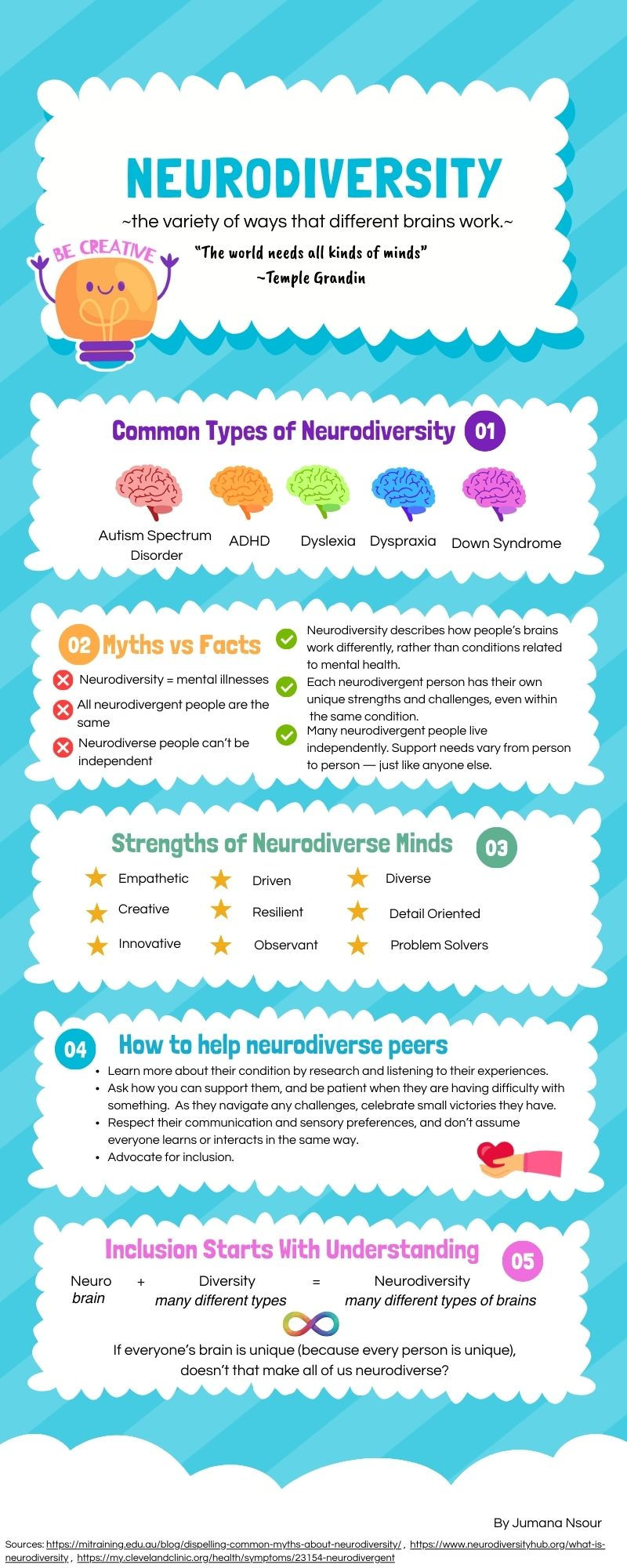
Through UVM's HERO Mentoring Program, Larner College of Medicine Student, Dalya Munir, mentored Jumana Nsour, an SB School Student. Nsour created these attached infographics and wrote this article on the strength behind those who are neurodivergent. Read below for some valuable facts and inspiration!
Our world is incredibly diverse. This diversity is often revealed through language, culture, and even our lived experiences. Another, often overlooked, form of diversity is our neurodiversity. Neurodiversity refers to the variety of different ways that people’s brains may work. Although the neurodiverse community is often overlooked, an estimated 15-20% of the world’s population are neurodiverse* (Northwestern University)! Under the umbrella of neurodiversity are conditions such as ADHD, Autism, Dyslexia, Dyspraxia, Down Syndrome, and Tourette’s Syndrome. Neurodivergent people are often creative, problem solvers, driven, resilient, and empathetic. Despite these strengths, living in a neurotypically oriented world is sometimes challenging for neurodiverse people. Some of these struggles neurodiverse people face may stem from feeling like they have a lack of support at school, in the workforce, at home, and beyond.
Support for neurodiverse people looks like:
● Having extra specialized assistance from teachers in school if needed
●Having accommodations for people with neurodiversity at home, school, or work (eg-giving headphones to an individual with autism if it allows them to focus better without getting overwhelmed)
● Giving neurodivergent people outlets where they can follow their passions (like Special Olympics!) and share their stories
● Spreading awareness about neurodiversity and actively seeking the voices of the neurodivergent community.

Although strides have been made to create a more inclusive environment for neurodiverse people, there is still room for improvement. For example, individuals with dyslexia often struggle with reading beginning in their early education. Without proper support, they might feel a pressure to be more like their classmates, lowering their self-esteem throughout their adolescent years. This isolating framework does not only limit those with dyslexia; but can harm many neurodiverse individuals. As a result, these challenges increase the likelihood that people with neurodiversity are more likely to experience mental health issues such as anxiety and depression. Struggles of the neurodiverse community may not be the same struggles neurotypical people encounter. And knowing that their struggles don’t impact most neurotypical individuals around them in the same way does little to make a neurodiverse individual feel any better.
Nonetheless, we all struggle and could all use support. Neurotypical individuals can take steps to help foster a more inclusive community for neurodivergent people by:
● Learning more about the different types of neurodiversity
● Connecting with someone you know who is neurodivergent, by asking them open-ended questions about what neurodiversity looks like for them, and how it impacts their life.
● Being a good friend/colleague/sibling/etc: Ask how you can support your neurodivergent peers.
● Taking a deep dive into learning about neurodiversity, or using the knowledge you already have about neurodiversity to educate others about this topic, and to help advocate for opportunities that can enhance success for neurodiverse individuals (eg- supports and accommodations in schools or in the workplace).
In the end, everyone is unique. We all have the responsibility to help create a world where everyone’s mind can thrive. My hope is that this inspires you to do the same: understand, advocate for, and promote inclusivity.
Additional resources on neurodiversity:
Neurodiversity
Autism Spectrum Disorder
● https://www.mayoclinic.org/diseases-conditions/autism-spectrum-disorder/symptoms-causes/syc-20352928
ADHD
Down Syndrome
Dyscalculia
Dysgraphia
Dyslexia
Dyspraxia
OCD
Bipolar Disorder
Sensory Processing Disorder
Tourrette’s Syndrome
● https://www.mayoclinic.org/diseases-conditions/tourette-syndrome/symptoms-causes/syc-20350465 ● https://my.clevelandclinic.org/health/diseases/5554-tourette-syndrome


Comments